

Five Books That Impacted My Year
- timomrod8
- Dec 26, 2023
- 3 min read
Updated: Apr 28, 2025

The holidays have arrived and there's no better time to get stuck into some reading. If you're short of ideas on where to start, here's five ministry & leadership books that struck a chord with me this year. I hope one sparks your interest.
Enjoy!!
5. The 6 Types of Working Genius - Patrick Lencioni

Anyone who's part of a team or works with others will know the frustrations that can arise. Some teams struggle for ideas? Others aren't able to implement them? Others go round in circles endlessly rethinking and evaluating?
Leadership guru, Patrick Lencioni is a master of teamwork (if you've read 'Five Dysfunctions of a Team' or the 'The Ideal Team Player' you'll know what I'm talking about). His latest book The 6 Types of Working Genius unpacks his theory on how teams function and how individuals thrive within them.
He argues (spoiler alert!) that every project requires six distinct skills (or "working genius"). Problem is, people only ever have two of these. The key therefore, is to identify your team's respective genius and put them in the right seats.
Sure, it's full of annoying Americanisms (i.e. who'd ever use the term 'genius'?) and frequently veers into pop-psychology and pseudo-science but for leaders looking to understand those they lead and help their team work well, it's a breath of fresh air.
4. 2 Samuel: Your Kingdom Come - John Woodhouse
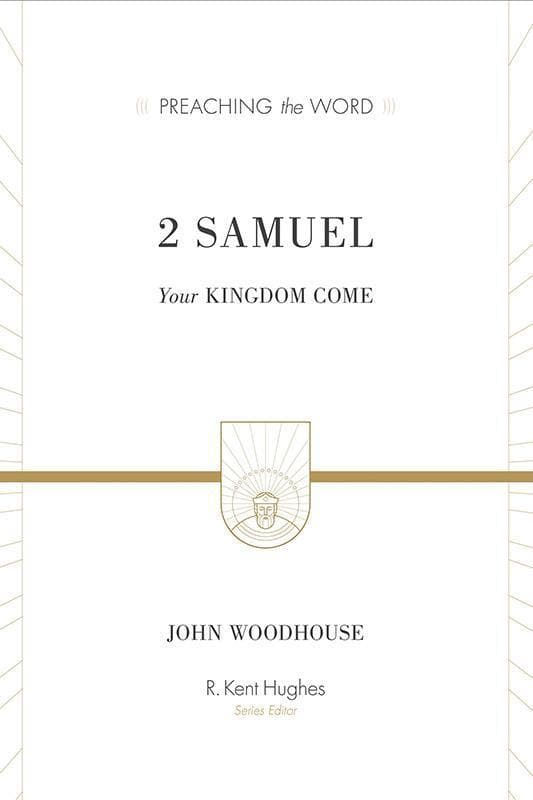
Each year I make a point of choosing one book of the Bible for deeper study and reflection. This year it was 2 Samuel.
To help I read John Woodhouse's commentary'Your Kingdom Come'. I was at Moore College when John was Principal and had the pleasure of hearing the sermon series the commentary is based on. It was a delight to revisit.
What makes John's bible teaching compelling is that he attends to the contours of text without losing the wood for the trees. To this end, the commentary repeatedly highlights details I'd not noticed before (i.e. it was Absalom's head not his hair that got caught in the trees). Yet these details are never academic but rather serve in knowing God's ultimate purposes in the Kingdom of the true Christ, the Son of David, the Lord Jesus. Highly recommend!
3. Untangling Emotions - Alasdair Groves & Winston Smith

If you've followed my blog you'll have caught me quote this one a few times. I read it in preparation for a seminar at a conference on the place of emotions in the Christian life. Turns out its wisdom was just as pertinent for me.
Two things struck me in particular. The first is just how significant our emotions are. As the book shows, emotions are a good gift from God that offers us a window into our hearts and helps us to connect with Him and others.
The other is how little attention I pay to my emotions and to cultivating a healthy emotional life. The book challenged this neglect encouraging me to not simply "feel" but ask "why do I feel this" and "how does it help me relate to God and those around me.
2. Biblical Critical Theory - Christopher Watkin

It's tricky to know what to say about Biblical Critical Theory. Others have likened it to Augustine's City of God and though time will tell on that front, it's certainly an extraordinary piece of work.
Over the past few months I've slowly thumbed my way through it. Watkins' goal is to construct a Christian worldview by tracing the unfolding biblical story. What's impressive is not only that he achieves this but does so with exegetical rigour, theological depth, cultural incision and pastoral nuance.
What sets it apart most, however, is that it never feels reactionary or polemic. Instead he thinks from the Bible outward into the world, showing over and again how, though affirming some elements of our culture and critiquing others, the scriptures tell a "better story" that make sense of our this world and offering purpose within and hope beyond.
1. You're Only Human - Kelly Kapic

Probably the best book I've read this year is Kelly Kapic's 'You're Only Human'. Though less ambitious in scope than Biblical Critical Theory, Kapic's theological acumen and insight into the human condition is no less profound.
His thesis is that we are finite beings designed by God with limits. This, he argues, is good news as it means rather than seeking to be 'all things to all people all the time' we can breathe, accepting our limitations and pursuing God's purposes within them.
For someone who veers between delusional attempts to 'be all things to all people' and despondency at my inability to achieve this, Kapic's message is something I need to take to heart. I suspect I'm not the only one.



Comments